
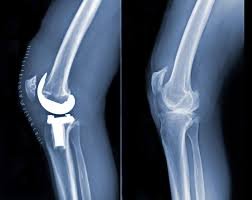
Knee replacement, or knee arthroplasty, is a surgical procedure to replace the weight-bearing surfaces of the knee joint to relieve pain and disability. It is most commonly performed for osteoarthritis, and also for other knee diseases such as rheumatoid arthritis and psoriatic arthritis. Osteoporosis does not typically cause knee pain, deformity, or inflammation and is not a reason to perform knee replacement.
Joint Replacement surgery has undoubtedly proven to be one of the milestone advancements in medicine during the last century. With the development of better materials and techniques, surgeons well-trained in this surgery can reproducibly produce good results for their patients, alleviating their pain, suffering and disability. Millions of patients worldwide have benefitted from this surgery, experiencing a new life in their crippled limbs.
Knee joint is the largest joint in human body, and has a prime role in activities such as walking, sitting and climbing stairs. Sociocultural and religious activities in Asian countries require squatting, kneeling and sitting cross-legged. These postures greatly depend on the knee joint, requiring deep knee flexion beyond 120 degrees. Due to such activities, osteoarthritis of knees is particularly common in Asian countries, with even young patients in the age group of 30 to 50 years being commonly affected. . Debilitating pain from osteoarthritis is much more common in the elderly.
In early stage, conservative treatment including activity modification, exercises, knee caps, some supplements, and, if required, injections into the joint can help. However, in advanced arthritis, knee replacement is currently the only treatment to restore pain-free mobility to the patient.
Total knee replacement (TKR) involves shaving off the bones forming the knee joint- namely femur (thigh bone), tibia (shin bone) and patella (knee cap), and replacing them with artificial components, made of a special metal alloy (cobalt-chrome, titanium or oxinium), with a plastic insert between them. These components are accurately matched to the size of the patient’s own bones, and are placed in a very careful manner, so as to maintain normal alignment of the limb. The components are usually fixed with special ‘cement’ to the bones. This gives a painless, smooth surface to the joints, and the patient can get back to his active life within a month. This ‘artificial’ joint usually serves the patient for 20 to 30 years, commonly lasting his or her lifetime. Then, if need arises, the plastic insert can be replaced with a newer one by a simple surgery, or in some cases, all the components are taken out, and fresh components are put, in a revision TKR.